



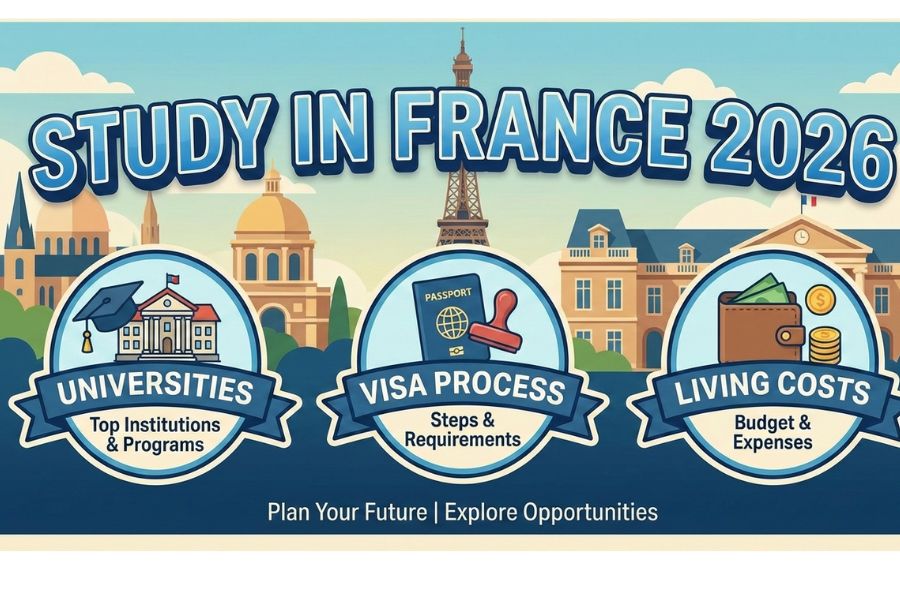

France keeps attracting students who want more than just a degree. It offers education with depth, daily life with balance, and exposure that shapes careers. For many, studying in France feels realistic rather than distant. If 2026 is your target year, this guide explains everything you need to know in clear terms, without exaggeration or complexity.
Why France Is Becoming a Top Choice for Students
France offers strong academic standards at costs that remain reasonable. Public universities provide quality education with controlled tuition fees. This makes France accessible to students from many regions.
Another reason is flexibility. Many universities now offer programs taught in English, especially for master’s degrees. Students can settle academically before fully adapting to the local language.
France also supports student life beyond classrooms. Cultural exposure, international peers, and industry links create real learning experiences. Graduates leave with skills that match global job markets.

Top Universities to Consider in 2026
France has a wide range of universities and specialized institutions. Each serves a specific academic purpose. The right choice depends on discipline, language preference, and budget.
Sorbonne University remains a strong option for arts, humanities, and sciences. University PSL focuses on research and innovation. It attracts students interested in interdisciplinary study paths.
Business students often look at HEC Paris and ESSEC Business School. These institutions focus on leadership and global management skills. Engineering aspirants choose schools like Ecole Polytechnique and Grenoble INP for applied technical training.
When choosing a university, consider location, teaching language, internship access, and housing options. City size often affects living costs and lifestyle.
Admission Requirements and Application Process
Applications usually start months before the academic year. Students need academic records, a passport, a motivation letter, and language proof. Some programs may request references or additional tests.
Most international applicants use the Campus France platform. It manages applications and connects students with institutions. After registration, students upload documents and select preferred programs.
Language requirements differ by program. English programs may require IELTS or equivalent tests. French programs usually require DELF or DALF scores. Always check official program pages.
A strong statement of purpose matters. Universities want clarity about goals and future plans. Simple and honest writing works better than over‑polished content.
France Student Visa Process Step by Step
After receiving an offer letter, the visa process begins. Understanding the steps helps avoid confusion. Students planning to study in France must follow Campus France validation and visa procedures.
First, confirm admission and prepare documents. These include passport copies, financial proof, accommodation details, and health coverage. Funds must meet minimum living requirements.
Second, attend a Campus France interview if scheduled. This step evaluates study intent and planning. Clear answers improve credibility.
Third, apply for a long‑stay student visa through the official portal. Submit biometric data and required fees. Processing time varies, so early application is advised.
Many students choose guidance from professionals like Globalizedvisaexperts to avoid errors and delays during this stage.
Tuition Fees and Scholarships
Tuition depends on institution type and program level. Public universities remain affordable compared to many global destinations. Private and specialized schools charge higher fees.
Scholarships reduce financial pressure. The Eiffel Excellence Scholarship supports high‑performing international students. Universities also offer merit‑based and need‑based aid.
Regional authorities sometimes provide funding options. These are less competitive but often overlooked. Tracking deadlines improves success chances.
Cost of Living in France for Students
Living costs depend on the city and lifestyle. Paris is expensive, while cities like Rennes, Nantes, and Clermont‑Ferrand cost less.
Housing forms the largest expense. Options include student residences, shared apartments, and private studios. University housing costs less but fills quickly.
Food expenses stay manageable with planning. Cooking at home reduces costs. Public transport offers student discounts. Healthcare remains affordable under the student social security system.
Students aiming to study in France should plan their monthly expenses carefully. Budgets usually range between 800 and 1400 euros.
Part‑Time Work and Student Lifestyle
International students can work part-time during their studies. Work hours are limited but helpful for daily expenses. Common jobs include cafes, stores, and campus roles.
Student life in France feels balanced. Museums, parks, and cultural events remain accessible. Cafes and libraries support focused study and relaxation.
Basic French skills improve daily life. Even simple phrases help with housing, transport, and social interaction.
Healthcare, Safety, and Student Support Services
France offers reliable healthcare access for students. The public system covers major medical needs. Universities also provide counseling and academic support.
Student associations help newcomers integrate socially. Events and clubs reduce isolation. University cities maintain strong safety standards with basic precautions.
Post‑Study Opportunities and Career Growth
Graduates can apply for temporary residence permits to seek employment. Many sectors value international graduates, especially in technology and creative fields.
Networking remains important. Career fairs, internships, and university workshops help build connections. Early engagement improves outcomes.
Completing a study in a French program adds international credibility. Employers value adaptability and cross‑cultural experience.
Practical Tips for Planning Your Journey
Begin planning at least one year in advance. Research programs, prepare documents, and plan finances early. Keep backups of important records.
Use checklists for applications, visas, and housing. Organization reduces stress.
Engage with current students online. Their experiences offer realistic insights.

Final Thoughts
France combines education, culture, and opportunity in a balanced way. Understanding universities, visas, and costs allows informed decisions.
With early planning and the right support, studying in France in 2026 can open doors to long‑term global growth.
FAQ’S
Yes, France offers strong universities, affordable public education, and wide course options in English and French.
You should start applications at least 10–12 months before intake to manage admissions and visa steps smoothly.
Not always. Many master’s programs are taught in English, but basic French helps with daily life and work.
Most students spend between 800 and 1400 euros per month, depending on the city and lifestyle.
Yes, international students are allowed to work part-time during their studies under French regulations.